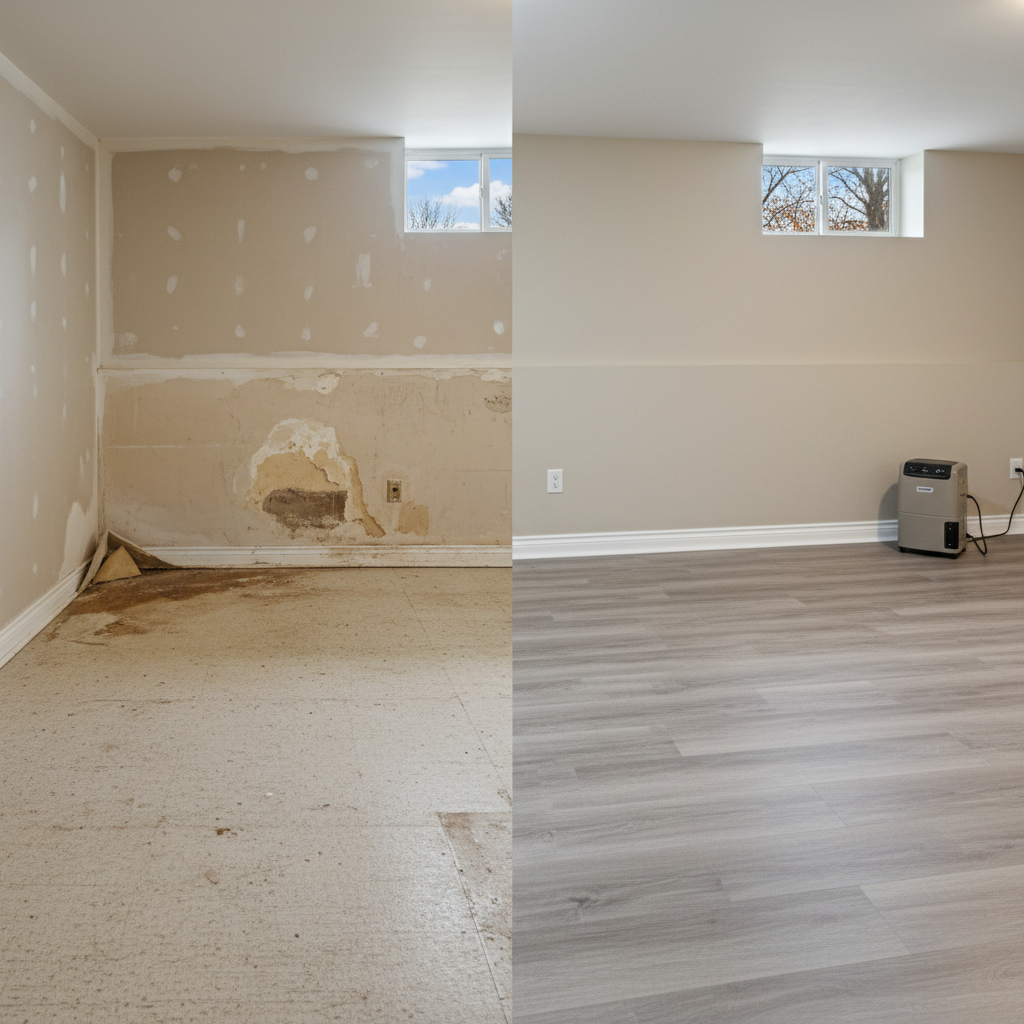
So, your basement just flooded. What a mess, right? Now you're staring down the barrel of cleaning it all up and figuring out how to prevent it from happening again, or at least how to handle the damage correctly. You've probably heard a few different ideas for dealing with it, but two main approaches usually pop up: encapsulation (that's sealing things up) and full reconstruction. As a contractor who's seen plenty of water damage across Fitchburg—from the newer homes near Swan Creek to those older places off Fish Hatchery Road—I can tell you both have their place.
Encapsulation: What Is It, Exactly?
When I talk about encapsulation in flood restoration, I'm generally referring to a process where we really clean and dry the affected area, treat it for mold, and then put a sealant or barrier over the damaged surfaces. This isn't just painting over a problem, not at all. We often use it when the materials' structure is still sound, but there's been enough water exposure that you could end up with ongoing moisture issues or mold if you don't contain it properly.
Think of it like this: if your concrete foundation walls got wet but they're still solid, we might clean them, dry them, treat them, and then put on a waterproof coating. Same goes for some subfloors that got wet but didn't warp or swell beyond repair. The whole idea is to create a barrier. This stops any leftover moisture from evaporating into your living space and keeps mold from growing on that treated surface. It's a way to head off future problems without ripping everything out.
Full Reconstruction: Tearing It Out and Rebuilding
Full reconstruction is pretty much what it sounds like. If your drywall got soaked, your insulation is squishy, or your wood flooring cupped and warped, we're tearing it out. This approach means removing all the damaged materials right down to the studs, subfloor, or foundation. Once we've taken everything out, dried it, and treated it, then we rebuild with brand new materials. That means new drywall, new insulation, new flooring, new trim—essentially, the space becomes new again.
This is usually the way we go when materials are clearly damaged, or if they're porous and can't really be dried and cleaned enough (like insulation). Or, if there's a lot of mold that encapsulation just can't handle. It's a thorough approach, making sure all the compromised stuff is gone and replaced with fresh, clean materials.
Cost: Where Does Your Money Go?
Let's talk about money, because that's always a big deal, isn't it? Encapsulation is generally cheaper upfront. You're paying for specialized cleaning, drying, mold treatment, and putting on a sealant. You're not paying for demolition, for hauling away debris, or for the cost of brand-new building materials and the labor to install them. It can save you a good chunk of change, especially if the damage is widespread but not bad enough to need a full tear-out.
Full reconstruction, on the other hand, almost always costs more. You've got the labor for demolition, the dump fees for all that wet junk, the cost of new materials, and the labor to install everything from drywall to paint to flooring. It's a bigger project with more moving parts, and that definitely adds up. But sometimes, it's the only real way to fix the problem for good.
Durability and Maintenance
When done right, both methods can be quite durable. An encapsulated surface, like a sealed concrete wall, can hold up really well against future moisture, assuming we've fixed whatever caused the flood in the first place. The coatings we use are tough; they're made to last. Maintenance is usually pretty minimal—just keep an eye on it, like you would any part of your home.
Full reconstruction, by its very nature, brings everything back to a "new" state. New materials have their full lifespan ahead of them, naturally. Here, durability comes down to the quality of those new materials and how well they're installed. Maintenance is standard for any new construction—just keep things clean and dry. The key difference is that with reconstruction, you've completely removed the *damaged* materials, so there's no lingering worry about what might have been left behind.
Appearance: What's the Final Look?
Encapsulation often leaves you with a functional, clean surface, but it might not be "finished" in the traditional sense. For example, a sealed concrete wall will probably look like, well, a sealed concrete wall—clean, but maybe not ready for paint or wallpaper without more finishing steps. If you're dealing with a utility room or an unfinished basement, this might be perfectly fine. But if it's a finished living space, you'll still need to think about how to make it look good after the encapsulation.
Full reconstruction gives you a fresh start. You get brand new walls, floors, and finishes. You can pick new colors, textures, and styles. The appearance will be just like a newly built or renovated space. If your flood happened in a finished living area, this is often the preferred route for aesthetic reasons alone.
My Recommendation for Fitchburg Homeowners
Here in Fitchburg, especially with our clay soils and the chance of heavy spring rains and snowmelt, basement flooding is a real concern. I've seen too many basements where people tried to cut corners, and it always comes back to bite them. My honest recommendation? If the materials are porous (like drywall, insulation, carpet padding) and they've been wet for more than 24-48 hours, or if there's any visible mold, you really need to go with full reconstruction. You simply can't adequately dry and clean those materials once they're saturated, and leaving them in is just asking for long-term mold and air quality issues.
However, if you had a clean water flood, caught it super fast, and it only affected non-porous surfaces like concrete foundation walls or a small area of subfloor that dried quickly and completely, then encapsulation can be a smart, cost-effective solution. It's crucial that professionals like us at Alpha Restoration do it. We know how to properly clean, dry, and treat the area before sealing it up. If there's any doubt about how bad the damage is or if mold might be lurking, I'm always going to lean towards removing and replacing. It gives you peace of mind, and in the long run, it's often the healthier and more durable choice for your home.
Don't guess when water damage hits. Get an expert opinion. We're here to help you figure out the best path forward for your specific situation.