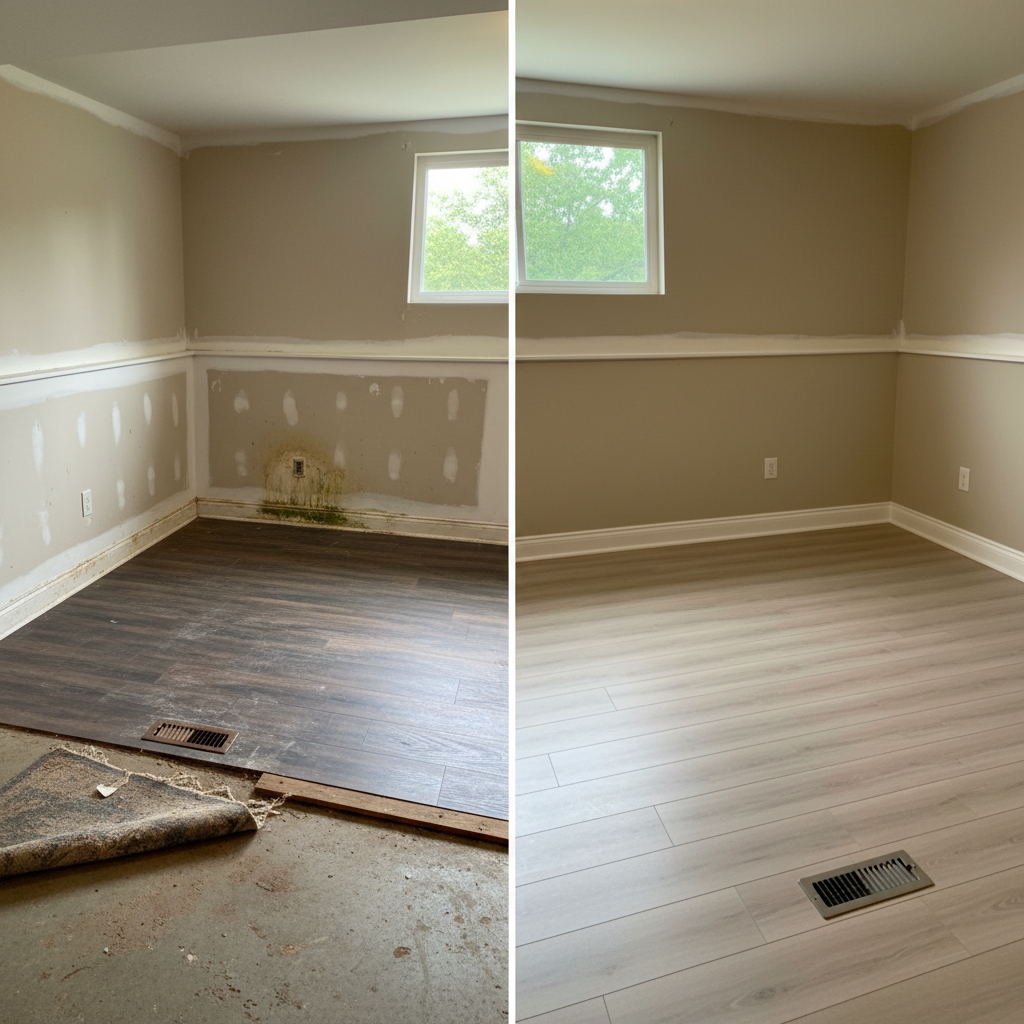
So, your basement flooded. Or maybe a pipe burst upstairs and water ran down through the ceiling. Whatever the cause, you're now staring at wet drywall, soaked insulation, and probably some warped flooring. It's a mess, and one of the first big questions that pops up is always the same: do we try to dry this out and repair it, or do we just rip it all out and replace it?
It's a critical decision, and honestly, there's no single right answer for every situation. It depends on a few things: how bad the damage is, what kind of water it was, and what your budget and timeline look like. As Alpha Restoration, we've seen it all across Fitchburg, from the older homes near the Capitol City Trail to the newer builds out by Swan Creek, and I can tell you, each job has its own quirks.
Option 1: The Repair and Restore Approach
This is where we try to save as much of the existing structure and materials as possible. Think of it as a less invasive surgery for your home. We're talking about extensive drying, cleaning, and sanitizing. It's often the first thought for folks when the damage isn't catastrophic or the water was relatively clean.
Cost
Generally, repairing and restoring is less expensive upfront. You're paying for specialized drying equipment, labor for cleaning and sanitizing, and maybe some minor patching or repainting. You're not buying all new materials, which can be a huge chunk of the budget. For a small area with clean water, this can save you a good amount of cash.
Durability
This is where you need to be careful. If done right, with proper drying and antimicrobial treatments, the restored materials can be just as durable as they were before. The key is making sure everything is bone dry and thoroughly cleaned. If any moisture is left behind, or if mold spores aren't properly addressed, you're looking at potential long-term issues like mold growth, lingering odors, or structural weakening. Sometimes, even if it looks okay, the integrity of materials like drywall or subflooring can be compromised by prolonged saturation.
Maintenance
Once restored, maintenance is typically the same as it was before. The biggest maintenance concern is making sure the initial restoration was complete and effective. You don't want to be dealing with mold remediation a year down the line because a corner wasn't dried properly.
Appearance
If the restoration is successful, the appearance should be seamless. A good restoration company can make it look like nothing ever happened. However, if materials like hardwood floors warped significantly, or if drywall swelled and then shrunk, you might still see subtle imperfections even after repairs. Sometimes, you just can't get it back to 100% perfect without replacing it.
Option 2: The Rip Out and Replace Approach
This is the more aggressive option. We're not trying to save anything that's been significantly damaged. It's about removing all affected materials – drywall, insulation, flooring, cabinets – down to the studs, drying the structure completely, and then rebuilding with new materials. This is almost always the go-to for category 3 water (sewage, river water, etc.) or when materials have been wet for too long.
Cost
This is usually the more expensive route. You're paying for demolition, disposal, all new materials, and the labor to install them. It's essentially a partial remodel, so the price tag can climb quickly. However, it often comes with more certainty about the long-term outcome.
Durability
When you replace materials, you're starting fresh. New drywall, new insulation, new flooring – it's all brand new, so you get the full expected lifespan and durability of those materials. There's less worry about hidden damage or lingering issues from the flood itself, assuming the underlying structure was dried properly before rebuilding.
Maintenance
Maintenance is just like maintaining any new construction or remodel. You're not dealing with compromised materials, so you can expect standard wear and tear. The peace of mind here is a big factor for many homeowners.
Appearance
With new materials, the appearance will be exactly what you choose. You can even take the opportunity to upgrade finishes or change the look of the space entirely. It's a fresh start, and the aesthetic results are typically perfect, without any lingering signs of the flood.
My Recommendation for Fitchburg Homeowners
For us here in Fitchburg, especially with our clay soils and the potential for heavy spring thaws or summer downpours, I lean towards replacement for anything beyond very minor, clean water damage that's caught immediately. Why?
First, the risk of mold in our climate is just too high. We get plenty of humidity, and if you've got compromised materials that aren't dried absolutely perfectly, mold can take hold fast. It's a pain to deal with, and it's a health risk. Second, many of the homes around here, especially those with finished basements, have materials like drywall and insulation that just don't stand up well to saturation. Trying to dry them out often leaves them structurally weak or prone to future problems.
If it's a small, clean water spill on a hard surface, sure, try to dry and restore. But if we're talking about standing water, water from a sewer backup, or anything that's been wet for more than 24-48 hours, my honest advice is to rip it out. You'll get a better, more durable, and healthier result in the long run, even if it costs a bit more upfront. It's an investment in your home's future, and you won't be constantly wondering if something is brewing behind the walls. We've helped plenty of folks make this call, and they've always been glad they went with the more thorough approach.