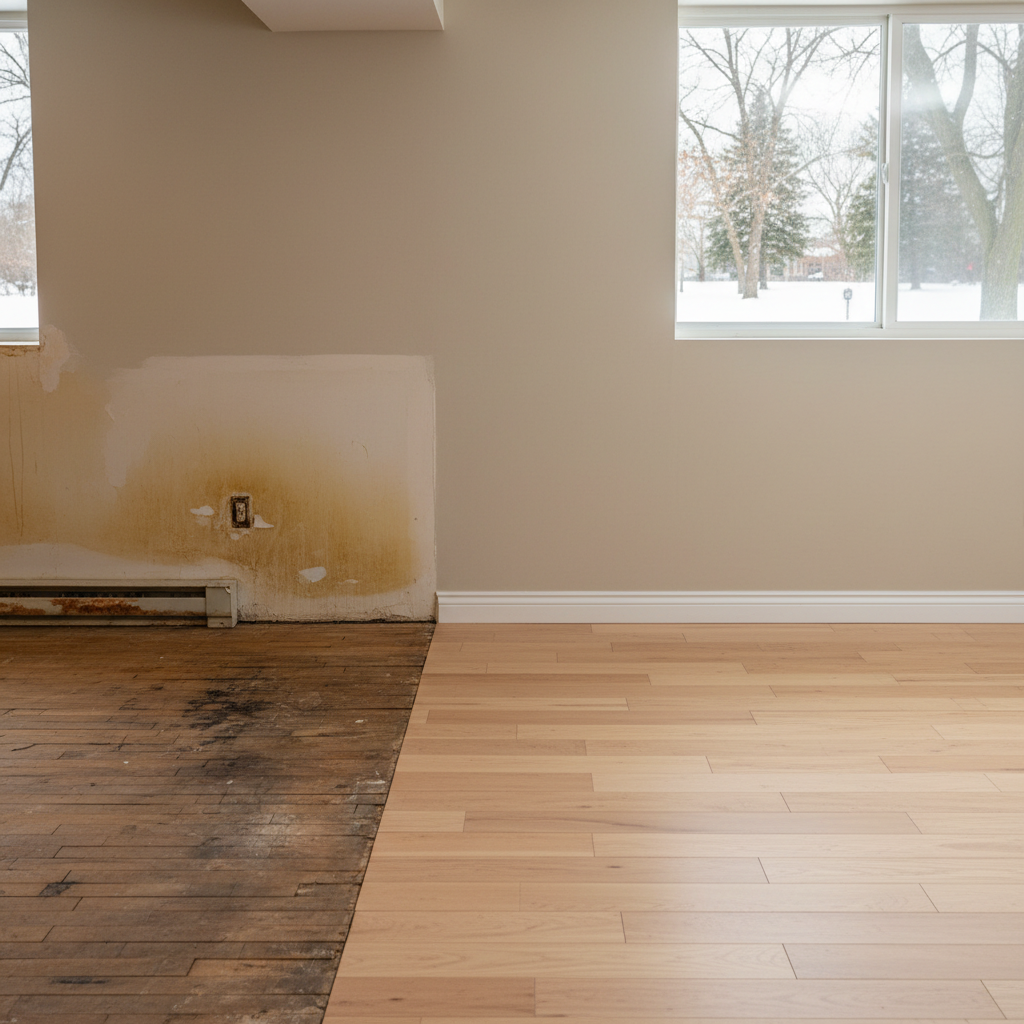
Alright, so you've got water damage. Maybe it was a burst pipe in the basement, or an overflowing toilet decided to go rogue, or even just some serious ice damming that finally gave way. Whatever the cause, you're now staring at wet drywall, soaked insulation, and buckled flooring. The big question always pops up: can we save it, or does it all need to go?
As someone who's seen a lot of water-logged homes around Fitchburg — from the older places near Fish Hatchery Road to the newer builds in Swan Creek — I can tell you there's no single answer that fits every situation. But we can look at the two main ways we handle things: targeted repair and full replacement. Let's talk about what each means for your wallet, how long your home will last, and how it'll look when we're finished.
Targeted Repair & Drying: The "Save What You Can" Approach
This is where we try to dry out and fix materials right where they are. Think of it like a doctor trying to heal a wound without surgery. We'll bring in the heavy-duty dehumidifiers, air movers, and specialized drying equipment. We might cut out small sections of drywall, but the main goal is to keep as much of the existing structure as possible.
The Good Stuff:
- Cost Savings: This is usually the cheaper option to start. You're paying for equipment rental, labor for setup and monitoring, and minor patching, not all brand-new materials.
- Less Disruption: We're not tearing your house apart, you know? It's typically quicker, and you might even be able to stay in your home, depending on how bad the damage is.
- Faster Turnaround: Since we're not waiting for new materials or doing a bunch of reconstruction, we can get things dried out and put back together faster.
The Not-So-Good Stuff:
- Risk of Hidden Issues: Even with the best equipment, there's always a slight chance that moisture could be trapped in places we can't easily reach or dry completely. This can lead to mold down the line if we don't get it just right.
- Appearance Might Not Be Perfect: If drywall gets too wet, even if it dries, it can warp or become structurally weak. You might end up with a wall that's not perfectly flat or a floor that feels a little spongy.
- Not Always an Option: If the water was contaminated (like sewage), or if materials soaked for too long, or if the damage is just too extensive, repair isn't even on the table. We have to be upfront about that.
Full Tear-Out & Replacement: Starting Fresh
This approach is exactly what it sounds like. We remove all affected materials – drywall, insulation, flooring, sometimes even the subflooring – right down to the studs. Then, we clean, sanitize, dry everything thoroughly, and rebuild with new materials.
The Good Stuff:
- Complete Peace of Mind: When we tear everything out, we can see exactly what's going on. No hidden surprises, period. You know for sure that all wet, contaminated, or damaged materials are gone.
- Better Long-Term Durability: New materials mean a fresh start. You won't have to worry about weakened drywall or subflooring that might have been compromised by water.
- Opportunity for Upgrades: This is your chance! If you've been wanting to change that old carpet to LVP, or upgrade your insulation, now's the time. It's much easier to do when the walls are open.
- Guaranteed Aesthetics: New materials will look new. No patched-up areas or slightly warped surfaces here.
The Not-So-Good Stuff:
- Higher Upfront Cost: You're paying for demolition, disposal, and all new materials, plus the labor to install them. It's almost always more expensive than targeted repair.
- Significant Disruption: This is a construction project. Your home will be a mess, and you'll likely need to find somewhere else to stay for a while.
- Longer Timeline: Demolition, drying, rebuilding – it all takes time. You'll be living with the aftermath for longer.
So, What's My Recommendation for Fitchburg Homes?
Look, I've seen a lot of basements around here, especially with our clay-heavy soils and the freeze-thaw cycles we get. That means water can sit and wick into materials faster than you'd think. For most significant water damage situations in Fitchburg, especially anything that's been wet for more than 24-48 hours, or involves contaminated water, I almost always lean towards full tear-out and replacement.
Why? Because the peace of mind is worth it. I've seen too many homeowners try the cheaper repair route, only to have mold issues pop up months later because something wasn't quite dry, or the material was just too far gone. Then they're paying us to come back, tear it out anyway, and deal with mold remediation on top of it. It ends up costing more in the long run, doesn't it?
With a full tear-out, you know we've got everything clean, dry, and rebuilt right. You're not just patching a problem; you're solving it completely. It's a bigger investment upfront, sure, but it protects your home and your health for the long term. That's what we aim for at Alpha Restoration – doing the job once, and doing it right.
Of course, every situation is unique. That's why we always do a thorough assessment before recommending a plan. But if you're looking for the most durable, worry-free solution, especially with the kind of weather we deal with here, replacing is often the smarter play.